24-Hour Emergency Water Damage Restoration in Vernon Hills, IL


Water is patient, but persistent. A small leak can rot a subfloor in weeks, while a burst pipe can destroy a living room in minutes. We are your local Vernon Hills, IL water mitigation specialists. We bridge the gap between "wet" and "dry" using industrial-grade science. When you search for "emergency water removal service near me," you are looking for speed, and that is exactly what we deliver.


The Race Against Mold and Rot


The most critical factor in water damage is time. We provide 24 hour water damage restoration because we know that waiting until morning can double the cost of repairs. Our process involves:

  • Extraction: Using submersible pumps and weighted extraction wands to physically remove standing water from carpets and floors.
  • Stabilization: Removing wet drywall and insulation that cannot be saved to open up wall cavities.
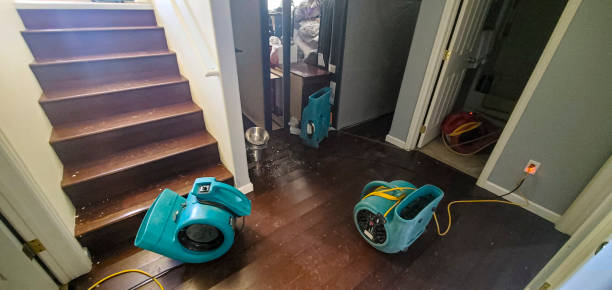
  • Drying: Deploying high-velocity air movers and LGR dehumidifiers to pull moisture from the structure.
Mold Prevention  Remediation


Flooded Basement & Crawlspace Solutions


Basements in Vernon Hills, IL are notorious for flooding. Whether it is a sump pump failure or heavy rains, we specialize in flooded basement cleanup. We don't just pump out the water; we sanitize the concrete and treat the area to prevent the musty odors associated with stagnant water. We ensure the "stack effect" doesn't pull moisture and mold spores from your basement up into your living room.


Water Cleanup and Drying
Flood Damage Solutions

Insurance-Focused Mitigation


We work for you, but we cooperate with your insurer. We document the "Class" and "Category" of the water loss, take moisture readings daily, and sketch the affected area. This meticulous approach ensures that your claim for water extraction and drying is backed by undeniable data.


Frequently Asked Questions


  • What is the difference between water mitigation and restoration? Mitigation is the emergency phase—stopping the water and drying the structure. Restoration is the repair phase—installing new drywall, paint, and flooring. We manage the entire process.
  • How long does it take to dry a house? On average, 3 to 5 days. However, dense materials like hardwood flooring or double-drywall can take longer. We monitor the drying progress daily.
  • Can you save my carpet? If the water is from a clean source (pipe burst) and we arrive quickly, yes. If the water is contaminated (sewage) or has sat for days, the pad and carpet usually must be replaced.
  • Do you fix the broken pipe? We are restoration specialists. We handle the cleanup. We recommend having a licensed plumber repair the active leak, though we can often provide a temporary cap to stop the flow.
  • What is a "pack out"? If your furniture needs to be moved to dry the carpet, we "pack it out" to a storage pod or dry area of the house to protect your belongings from humidity.


Don't Let Water Ruin Your Home


Every minute the water sits, the damage deepens. Let our rapid response team extract the moisture and save your home from long-term decay.

Call for immediate extraction: 18337831270


Customer Reviews

"I came home to 3 inches of water in my kitchen. The team arrived in 45 minutes and sucked it all up. They saved my cabinets from swelling."

"My sump pump failed during a storm. They pumped out the basement and sprayed an antimicrobial so it wouldn't smell. Great job."

"Highly recommended for insurance claims. They handled all the photos and paperwork for my adjuster."


Vernon Hills, IL Insights: Population,
Zip Codes, Influence, and Service Areas

The land that was to become Vernon Hills, founded by Richard Theodore Freese, Ron Freese, and Jim Carswell, began with the establishment of a 200-acre (0.81 km2) farm in 1857. Use of the land remained relatively static until the 1960s, when part of it was purchased for a residential community and golf course; the development was the first use of the name "Vernon Hills." On June 16, 1958, the village officially incorporated with 123 residents and 125 houses in a single subdivision built by Quinn Hogan and Barney Loeb. During these times, the village and police department were run from a local motel until 1971 when village trustees bought two portable buildings. It saw steady but slow growth until the annexing of a plot of land near the corner of IL-60 and IL-21 in 1971, which led to the building of 1,200,000-square-foot (110,000 m2) Hawthorn Center. By 1980, the village's population had grown to almost 10,000 residents, and by 2000, it had surpassed 20,000.

Zip Codes in Vernon Hills, IL that we also serve: 60061


Cities Close To Vernon Hills, IL That We Also Serve


Click Here To Call Us (1833) 7831-270